What is semaglutide, and how does it work?
Semaglutide was initially developed to manage diabetes, with patients and physicians alike noting its weight loss effects since 2005. This medication is now FDA-approved for weight management and works by mimicking a hormone called GLP-1, which regulates appetite and food intake.
Essentially, you’ll feel fuller for longer and with fewer calories when taking semaglutide. The lower calorie intake leads to weight loss and helps you become more aware of your eating habits as your body gently adjusts to healthier portions.
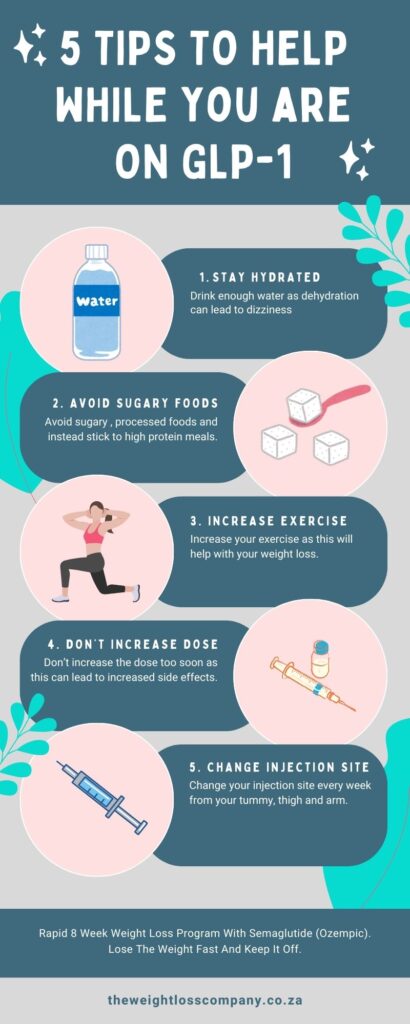
Semaglutide injections are administered as subcutaneous injections once a week.
How does Semaglutide work?
Semaglutide works to lower high blood sugar by increasing the amount of insulin that is released, lowering the amount of glucagon released and by delaying gastric emptying. Semaglutide also controls appetite and so helps you reduce the amount of food that you want to eat. Semaglutide is a glucagon-like peptide-1 (GLP-1) agonist.
What are Common Semaglutide side effects?
Side effects may include low blood sugar (in people with type 2 diabetes), upset stomach, heartburn, burping, gas, bloating, nausea, vomiting, stomach pain, loss of appetite, diarrhea, constipation, stomach flu symptoms, headache, dizziness, tiredness.
High-fat, ultra-processed, and high-sugar foods and drinks, such as red meat, fizzy drinks and alcohol, are common culprits.
What foods to avoid while taking Semaglutide?
Eating certain foods while taking semaglutide may increase or cause GI-related side effects, such as nausea, bloating, and diarrhea. Bland foods and plain water are least likely to cause discomfort, but experts share that there’s no one-size-fits-all diet. Specific diets do not work for everyone as each person is different. And what may work for one person will not necessarily work for someone else.
Avoid high glycemic index foods (e.g white bread, corn flakes, fruit juice. instant noodles, rice cakes,potatoes), ultra-processed foods, and high sugar foods and drinks.
Semaglutide slows down how fast the gut moves, which means these foods can hang around longer and cause symptoms.
Is semaglutide the same as insulin?
No, semaglutide stimulates healthy insulin production, whereas insulin replaces the body’s insufficient insulin. Both regulate blood sugar levels.
Can you exercise while taking semaglutide?
Absolutely! Exercise enhances semaglutide’s effectiveness and further improves other weight-related health markers such as blood pressure. Further, maintaining a more active lifestyle will help you keep the weight off after you stop taking semaglutide.
What foods should I include in my nutrition plan?
Lean proteins like skinless chicken breast, white fish, lean cuts of meat, or plant-based proteins are great options, along with complex carbs like whole wheat, quinoa, and brown rice. Low-glycemic fruits and veggies such as berries, grapefruit, leafy greens, and lentils are also good choices. Whole foods can also help lessen the intensity and duration of temporary side effects of semaglutide!